
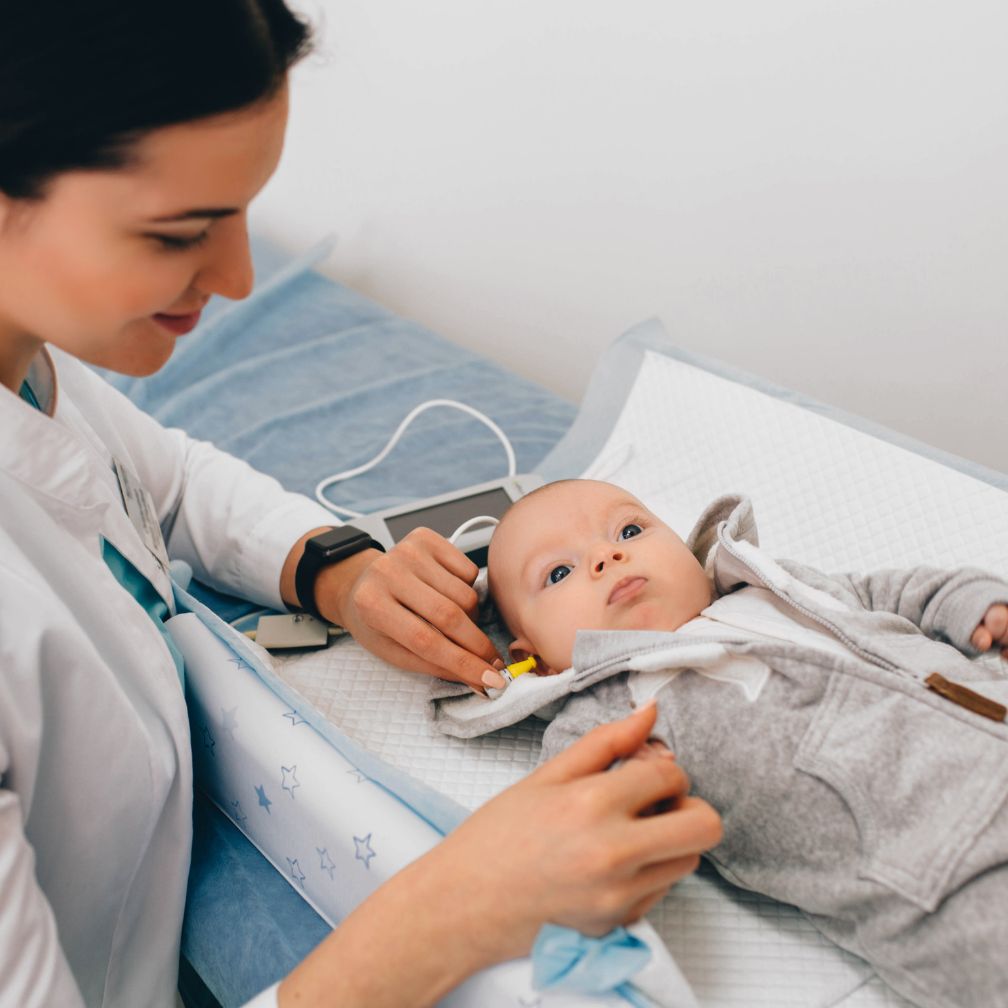
For parents holding a newborn, receiving news of an infant’s hearing impairment often feels distressing and daunting. Yet the encouraging reality remains that owing to swift diagnosis and early care, infants experiencing hearing loss are positioned to flourish. Indeed, these children can build language, communication skills, and strong connections with the world around them, paving the way toward a vibrant, rewarding life!
Utilizing individual hearing aids alongside surgical cochlear implants provides two highly successful approaches for guiding infants with hearing loss. Inside this overview, we outline their working mechanisms to guide you in choosing the optimum pathway for your infant.
Unpacking the Foundations of Infant Hearing Loss
Hearing impairment in young infants can be driven by multiple potential origins, including:
- Known hereditary genetic markers (even when devoid of any documented parental history)
- In-utero viral infections such as cytomegalovirus (CMV) and rubella viruses
- Major delivery difficulties, including acute oxygen deprivation or early birth
- Select ototoxic pharmaceuticals applied inside clinical neonatal units
Which phase matters most? Swift medical diagnosis. Because of these standards, babies cared for in United States nurseries receive auditory evaluations before discharge from the hospital. Pediatric hearing experts routinely implement the established “1-3-6” care guideline:
- First-stage screening executed before 1 month of life
- Detailed comprehensive diagnosis completed prior to 3 months of age
- Clinical intervention (utilizing hearing aids or therapy) commenced by 6 months
Meeting these clinical targets gives infants an unparalleled opportunity for normal speech, expressive language, and cognitive progression. If you need further clarity surrounding these screening procedures, your pediatrician will be happy to help!
Understanding Amplification Devices for Infants
For infants diagnosed with mild to severe hearing deficits, specialized hearing aids usually function as the frontline therapeutic choice. These miniature, body-worn units enhance environmental audio, allowing infants to hear human speech and background noise much more clearly.
Advanced pediatric hearing aids operate as:
- Safe for infants as young as a few weeks old
- Designed featuring flexible, soft ear impressions that update as the baby matures
- Outfitted with child-resistant battery compartments and child-focused protective features
- Expertly tuned by a pediatric audiology specialist to target your infant’s unique hearing profile
As your baby grows, these hearing instruments require routine adjustments to maintain physical comfort and functional efficacy.
Cochlear Implant Options for Newborns
In cases where a child exhibits profound to severe sensorineural hearing impairment and doesn’t benefit enough from hearing aids, clinical teams frequently recommend a cochlear implant. Differing from standard hearing aids, cochlear technology:
- Must be placed via a specialized surgical procedure under standard general anesthesia
- Successfully bypass non-working zones inside the inner ear
- Convert sound waves into focused electrical signals that actuate the nerve of hearing
Integrated cochlear implant systems serve as:
- Officially FDA-approved for application in young infants starting at 9 to 12 months of age
- Highly successful whenever integrated with comprehensive speech therapy and consistent family engagement
- Prescribed solely following a thorough evaluation by a certified audiologist and otolaryngologist
This diagnostic phase features radiological imaging, comprehensive audiometric testing, and open dialogue concerning long-term communicative results.
Contrasting Hearing Aids with Cochlear Implants
- Mild to severe hearing challenges suit Hearing Aids; Severe to profound hearing impairment calls for Cochlear Implants
- Non-Invasive wearable application: Hearing Aids; Surgical insertion required: Cochlear Implants
- Sound processing amplification: Hearing Aids; Converts Sound Electrical Signals: Cochlear Implants
- Fitting starts at early infancy: Hearing Aids; Implantation starts at 9-12 months: Cochlear Implants
Final Takeaways: Navigating Infant Hearing Solutions
If your infant is diagnosed with a hearing condition, you have access to outstanding technological paths and dedicated expert support. With the help of pediatric hearing specialists, most children construct language capabilities completely equal to their hearing peers.
Whether your baby benefits most from custom hearing aids or a cochlear implant system, early intervention unlocks lifelong developmental success.
Do you need professional advice regarding your baby’s current hearing health? Reach out to our specialists today to obtain an exhaustive evaluation and custom-designed care plan.