
Modern Hearing Aids Don’t Look (Or Feel) Like Your Grandparents’ Devices
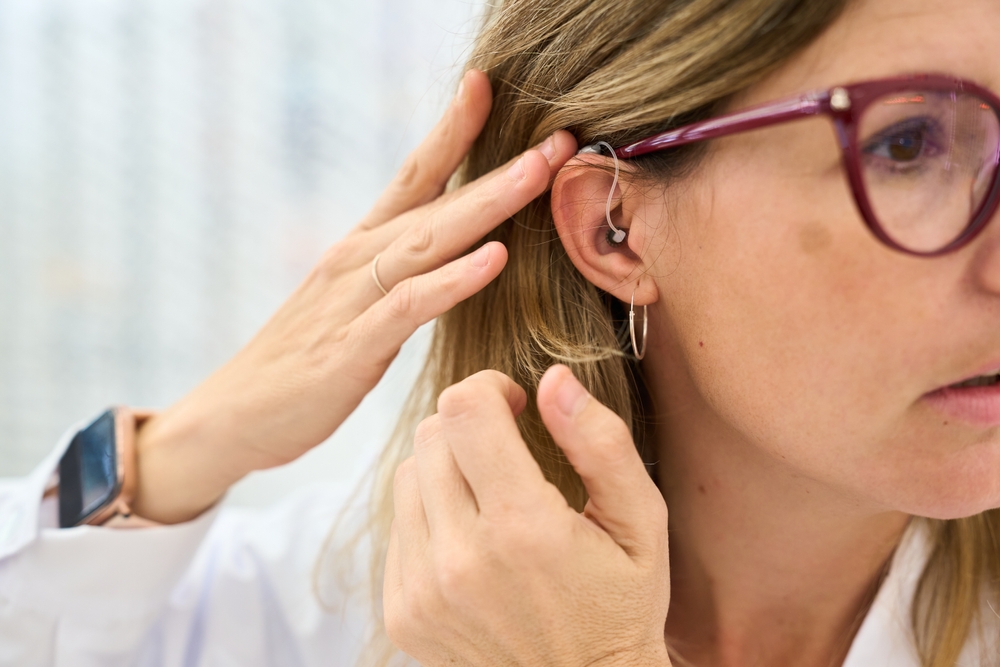
A significant number of patients postpone treating their hearing loss because they harbor concerns regarding device aesthetics and physical comfort. This hesitation is entirely valid given historical product designs! In various scenarios, patients expressed fear that wearing an obvious device would cause peers to omit them from casual conversations due to perceived listening limitations.
For many people, this image has stuck, making them hesitant to take the next step. In reality, the sophisticated hearing instruments of the present era deliver a look and feel that shatters these old assumptions. Revolutionary breakthroughs in micro-component miniaturization and ergonomic design have rendered these devices incredibly compact, ultra-lightweight, and virtually unnoticeable.
Should your reluctance stem entirely from memories of obsolete, bulky hardware, you owe it to yourself to discover current medical advancements.
Dispelling the Myth: Modern Devices Have Transcended Older Styles
When asked to visualize a hearing instrument, the average person still envisions an awkward, highly conspicuous piece of hardware visible from yards away. If that’s the case, you’re thinking about hearing aids circa the 1980s and ’90s.
Over the last few generations, this medical technology category has experienced a total structural evolution. Unprecedented breakthroughs in microchip architecture, material sciences, and digital signal processing have utterly revolutionized modern aesthetics. Current product lines are incredibly compact, architecturally clean, and purpose-built to harmonize with your features or sit entirely out of sight.
Numerous modern instruments are inserted completely within the ear canal structure, rendering them undetectable throughout standard daily dialogue. Alternatively, post-auricular models are constructed with such streamlined dimensions that they disappear against the scalp, customizable to complement individual skin and hair coloration.
A Taxonomy of Modern Styles: From Totally Hidden to Ultra-Streamlined
If you are curious about the structural choices available for your rehabilitation, here is an accessible overview of current styles:
Invisible-in-Canal (IIC) Technology
These are as discreet as it gets. An IIC device is positioned entirely past the second bend of the auditory canal, fabricated from a personalized physical matrix of your unique anatomy. Spoken interactions at arm’s length occur without anyone realizing a medical device is present. This configuration is highly favored by individuals managing mild-to-moderate auditory drops who demand total aesthetic secrecy.
Receiver-in-canal (RIC) / Receiver-in-the-ear (RITE)
This architecture stands as the most frequently prescribed configuration in modern clinical practice. The system utilizes an incredibly small housing resting behind the ear, linked by a hair-thin translucent cable to a miniature speaker within the ear pathway. To a casual observer, their clean lines often mimic high-end commercial wireless earbuds. Surrounding individuals will remain completely unaware of the technology unless they actively look for it.
Traditional Behind-the-Ear (BTE) Reimagined
These units reside entirely behind the external ear, providing a slightly larger chassis that is still infinitely more elegant than historical variations. They are typically prescribed to resolve advanced levels of hearing impairment, generating exceptional sound amplification without the cumbersome weight users traditionally dread.
The bottom line is simple: modern assistive hearing systems are crafted to serve your life quietly, not to draw attention to your ears.
Modern Hearing Aids: Looking Better and Doing a Lot More
It is vital to recognize that this technological revolution is not simply a visual upgrade. Today, they function more like smart devices than traditional medical equipment. A vast majority feature native Bluetooth connectivity, enabling seamless, wireless streaming of telephonic communication, media, and television audio directly into your auditory pathway.
Equipped with dedicated smartphone applications, they allow users to manipulate volume matrices or toggle environmental programs without making manual physical adjustments. Say you’re walking into a noisy restaurant: You can fine-tune your hearing to match the environment in seconds. Advanced rechargeable battery banks have effectively replaced the small, fragile power cells that used to cause immense frustration. Just place them on a charger overnight, like your phone.
Overcoming the Psychological Barriers to Better Hearing
Despite understanding these technological quantum leaps, psychological resistance remains highly common. Acknowledging a sensory deficit and investigating rehabilitation options often forces a difficult confrontation with our own vulnerability and bodily changes. This can make us feel helpless and like we aren’t fully in control of what’s happening to our bodies.
Consider a healthier perspective: wearing a contemporary hearing system does not mean your body has failed you. They’re simply a sign of change, which happens to us all. Investing in your hearing shows that you are actively deploying advanced resources to support your systemic well-being and social connection.
Consider the profound joy of wearing a tiny, unnoticeable device that lets you confidently command group discussions, master noisy environments, and immerse yourself in what matters most. This is the definition of true personal empowerment!
Discover the Reality of Modern Otolaryngological Solutions
To dismantle old assumptions, the best strategy is to witness these design breakthroughs with your own eyes. Our clinical team cordially invites you to visit our facility, interview our staff, and evaluate different form factors in a stress-free, zero-obligation environment. View this consultation simply as a tactile opportunity to discover just how radically changed this technology has truly become.
Almost every visitor walks out completely shocked by how weightless, ergonomic, and cosmetically invisible these tools are in practice! Do not let outdated myths delay your wellness—call our specialized practice or book your appointment online today.