
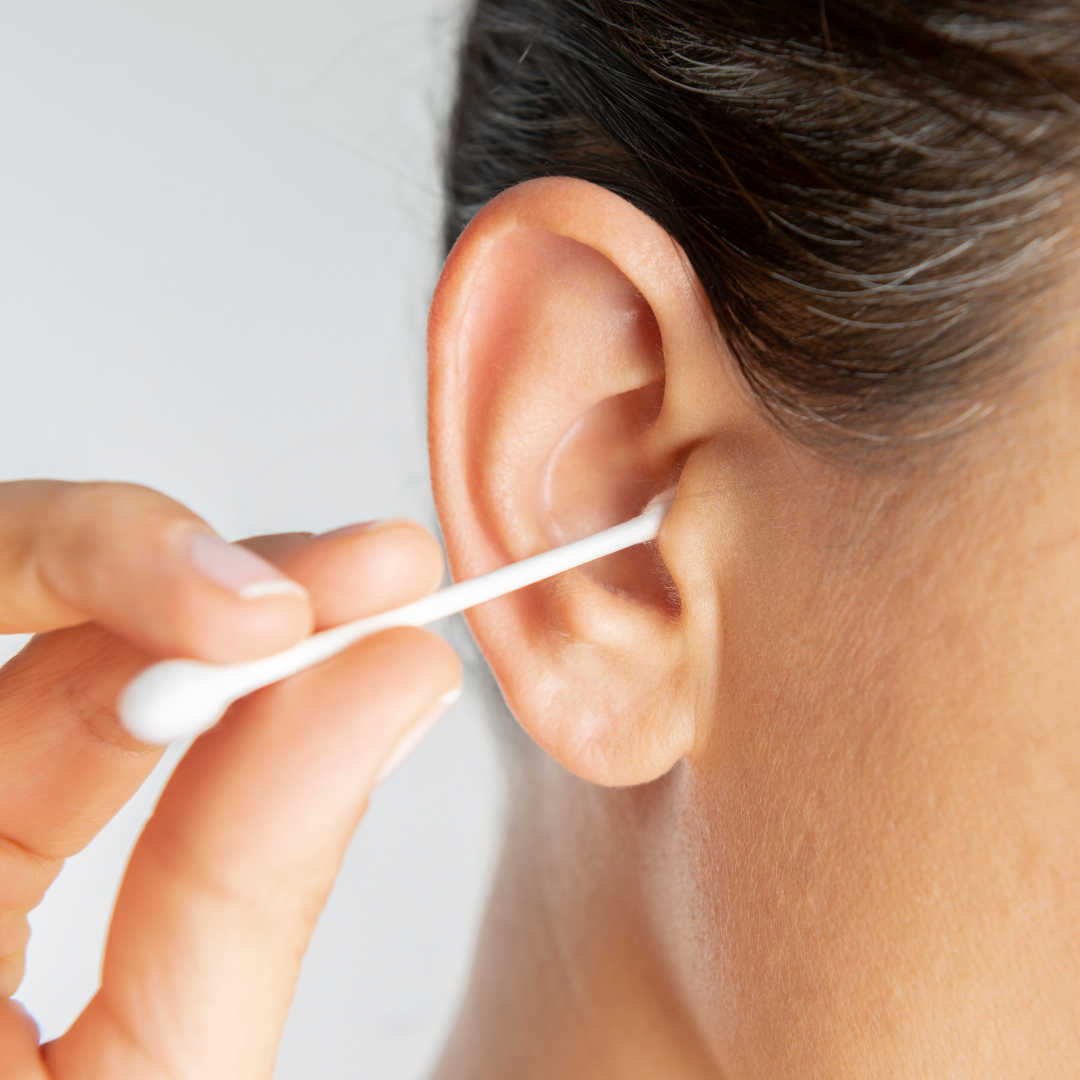
While cotton buds look like simple cleaning instruments, inserting them directly into your ear canal complicates hygiene and can injure sensitive structures. Our specialists determine if cerumen warrants clinical clearing and advise on targeted methods designed to protect your hearing health. Most ears do not mandate routine physical scrubbing; yet, if accumulation occurs, we guide patients through safe cerumen management.
Understanding the Risks of Using Q-Tips in the Ear
Clinically speaking, earwax, or cerumen, should never be regarded as dirt or debris. It serves by ensnaring foreign debris, discouraging bacterial invasion, lubricating skin linings, and safeguarding the inner canal. Rhythmic jaw motion and outward dermal migration move drying wax toward the external orifice, where it effortlessly washes away.
Using a cotton swab within the ear canal halts this physiological self-cleaning function. Even if the swab gathers a trace of surface cerumen, it routinely compacts the remaining mass against the eardrum. Chronic swab insertion frequently compresses cerumen into a dense impaction, triggering a sensation of aural fullness that invites improper cleaning cycles.
You may gently utilize cotton swabs across the external auricle, but you should avoid inserting them into the internal canal.
Clinical Complications Associated with Q-Tip Insertion
Canal skin is thin, vascular, and highly vulnerable to mechanical abrasions. Minor scratches can trigger localized pain, bleeding, and bacterial infiltration, substantially elevating the risk of otitis externa. The cotton end can also dislodge from the applicator, creating a retained foreign body within the ear.
Possible injuries include:
- Deep mechanical cerumen impaction
- Canal abrasions, dermal irritation, edema, and hemorrhage
- Secondary bacterial otitis externa
- Foreign matter or cotton material lodged in the ear
- A torn or perforated eardrum
- Damage to the tiny acoustic middle-ear bones
- Sudden alterations in auditory acuity or permanent hearing changes
- Distressing tinnitus, secondary dizziness, or debilitating ear pain
Though critical trauma is uncommon, an unexpected collision, a sudden slip, or overzealous penetration can cause extensive ear injury.
Establishing Safe Intervals for Earwax Extraction
Most individuals do not need to perform earwax maintenance on a calendar schedule. Physiologically stable ears continuously migrate wax outward, while standard showering takes care of the visible ear. Scrubbing too frequently dehydrates the auditory passage, causes persistent irritation, and raises risks for secondary infections or blockages.
Extraction is medically indicated when cerumen fully occludes the lumen, blocks visual examination of the eardrum, compromises hearing aid function, or induces pain.
How to Address Earwax Safely at Home
Whenever cerumen remains asymptomatic, avoiding manual intervention represents the safest course of action. Use a damp, soft cloth to clean only the exterior ear structures, allowing the inner canal to maintain itself.
When dry wax demands pre-treatment, we often advise using an OTC cerumenolytic solution or drops composed of glycerin, mineral oil, carbamide peroxide, or saline. Follow the package directions meticulously regarding droplet quantity and consecutive days of use. Discontinue the product right away if you encounter otalgia, severe dizziness, contact dermatitis, or aggravating symptoms.
Home flushing is contraindicated in many cases and should solely be conducted after an expert confirms safety and reviews proper methods. Under no circumstances should you ever use a pressurized dental oral irrigator in the ear. Avoid hazardous gadgets including ear candles, sharp metal loops, camera-assisted tools, hair clips, and home vacuum extractors. These products may burn, cut, puncture, or push wax farther inward.
When Is Professional Earwax Extraction Necessary?
You should book a clinical appointment if your ear feels blocked following softening drops, cerumen is deeply wedged, or home methods fail to work. Expert removal is the safest path for patients who struggle to hold still, individuals with narrow ear canals, hearing aid wearers, or those with surgical contraindications to irrigation.
You should seek professional assessment for:
- Ear pain, persistent itching, or tenderness
- Active bleeding, pus formation, clear exudate, or malodorous drainage
- Systemic fever spikes or acute swelling near the external ear
- The sudden appearance of tinnitus or true dizziness
- Acute sensorineural hearing loss or auditory decline persisting after cerumen extraction
- A suspected perforated eardrum or retained cotton tip
- Frequent wax buildup that occludes or damages hearing aids
Sudden drops in hearing in a single ear require emergency medical attention rather than casual attribution to earwax. Fast diagnostic testing reliably differentiates a conductive wax plug from an acute, time-sensitive sensorineural emergency.
Audiological Approaches to Excess Earwax Removal
Our clinical team begins by evaluating the ear canal using an otoscope or binocular microscope to confirm cerumen impaction and inspect for infection, trauma, or tympanic membrane perforations. Choosing the safest clinical protocol relies on cerumen firmness, individual canal anatomy, medical records, otologic surgical history, and patient tolerance.
In-office clinical procedures include:
- Therapeutic cerumenolytic solutions instilled before or during treatment
- Controlled ear flushing using warm, body-temperature water on intact eardrums
- Gentle suction under direct visualization
- Mechanical extraction using sterile ear loops, specialized curettes, or micro-forceps
Operating under direct magnification allows the clinician to avoid sensitive canal walls and halt instantly if the patient experiences pain. You may need more than one method for dry or tightly packed wax. Following the procedure, the ear is re-evaluated to guarantee that both the canal passage and eardrum are clear and healthy. When symptoms like fullness, tinnitus, vertigo, or hearing loss continue, supplementary audiological assessments can uncover alternate conditions.
Request an Appointment for Clinical Earwax Removal
If your ears feel blocked or your hearing has changed, schedule an evaluation with us instead of reaching for a Q-Tip. During your consultation, we examine current symptoms, prior ear surgeries, hearing aid habits, home remedies, and physiological factors that drive wax accumulation. Contact us to request an earwax-removal appointment.